Table of Contents
If you’ve ever found yourself crying over something small right before your period and then feeling perfectly fine a few days later, you’re not imagining it. This shift is often part of the link between PMS and Depression, where natural hormonal changes can temporarily affect mood, emotional regulation, and stress tolerance. That emotional dip isn’t weakness or “being too sensitive.” It’s your body responding to real biochemical fluctuations that influence how you feel, think, and process the world around you.
I’ve worked with women for years who say, “I don’t even recognise myself the week before my period.” I’ve been there too. One moment, I’m motivated and clear headed; the next, I feel flat, disconnected, or on the verge of tears for no reason. This is one of the most misunderstood parts of PMS, and when it becomes intense, it can look a lot like depression.
When I first began exploring this link, I realised how often women were told to “just relax” or “it’s all in your head.” But the truth is, these mood changes are rooted in biology, not imagination. Once you understand how hormones interact with your mood, you can stop blaming yourself and start managing PMS depression more effectively.
PMS vs Depression: How to Tell the Difference
One of the most common questions I get is, “How can I tell if it’s PMS or actual depression?”
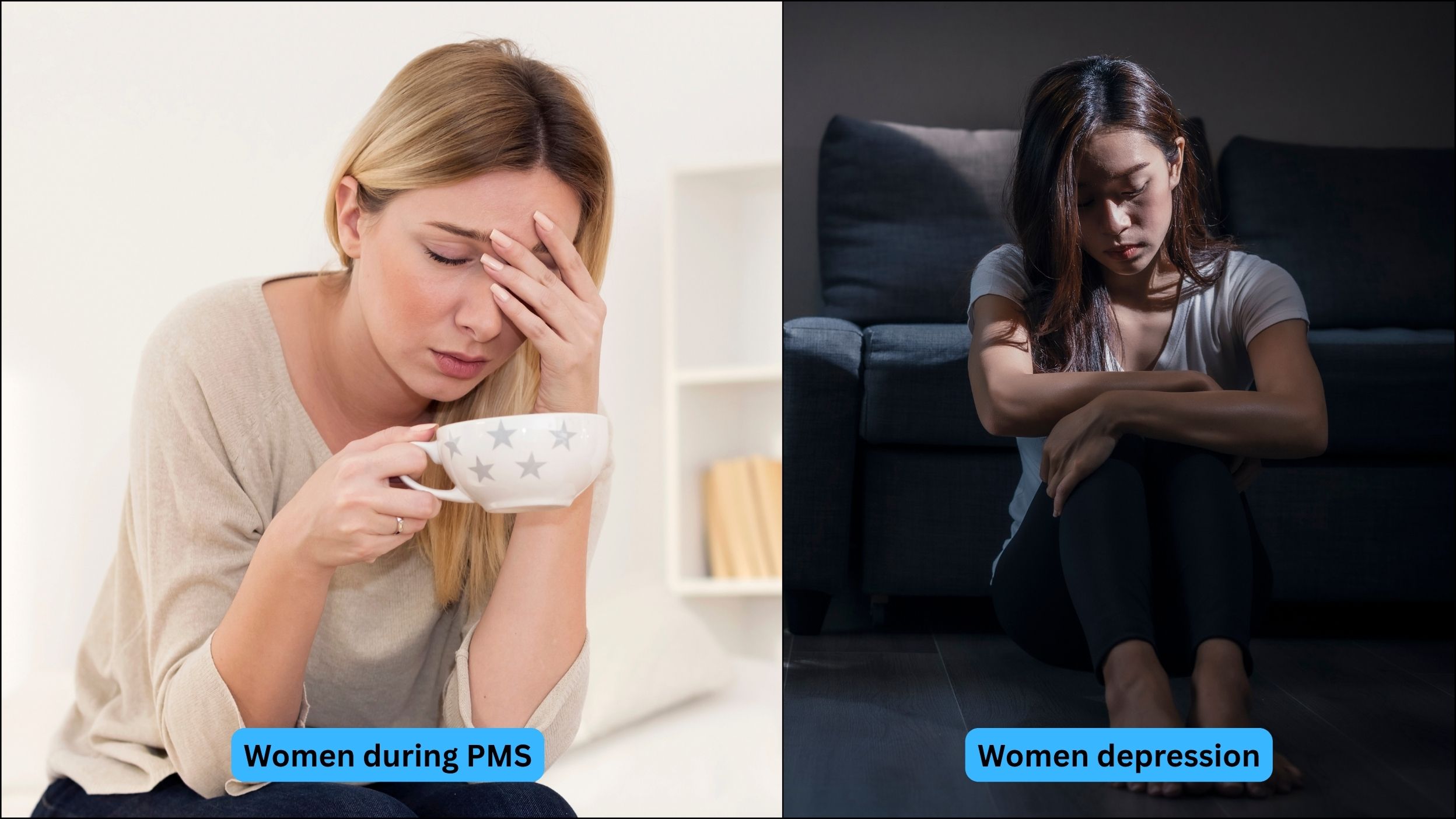
The key difference is timing. PMS related mood changes are cyclical. They tend to appear in the one to two weeks before your period and lift once bleeding begins. Depression, on the other hand, lingers throughout the month.
Here’s how to tell the two apart:
| PMS Depression | Clinical Depression |
| Appears 1–2 weeks before your period | Lasts for 2+ weeks continuously |
| Lifts when your period begins | Persists regardless of your cycle |
| Irritability, sadness, anxiety | Hopelessness, disinterest, guilt |
| Linked to hormonal changes | Can result from multiple factors |
For some women, PMS can progress into a more severe condition called PMDD (Premenstrual Dysphoric Disorder). PMDD is characterized by intense mood swings, severe depression, and even intrusive thoughts. It’s not simply “bad PMS” , it’s a clinical condition that requires proper support. I’ve worked with women who felt terrified by how low they felt each month but didn’t know it had a name. Once we identified the pattern, the sense of relief and validation was enormous.
The Science Behind PMS Depression
Understanding the science behind PMS depression helped me change how I approached my own emotional health.
During the luteal phase of your menstrual cycle the time between ovulation and your period estrogen levels drop while progesterone rises. Estrogen supports serotonin production, which influences mood and happiness. When estrogen falls, serotonin often dips with it, leading to sadness, fatigue, and irritability.
Progesterone, meanwhile, can have a calming or sedative effect for some women, but for others, especially those sensitive to hormonal fluctuations, it can increase anxiety and low mood. Add in stress, poor sleep, or blood sugar imbalances, and it’s easy to see how this hormonal cocktail can trigger emotional instability.
I’ve seen this firsthand with clients. Many tell me that their self esteem and energy plummet just before their period, but once bleeding starts, it’s like a switch flips. That’s not psychological weakness, it’s biochemical change.
My Experience Helping Women Through PMS Mood Swings
When I started working with women on cycle health, I assumed most came to me because of cramps or bloating. What I didn’t expect was how often emotional struggles came up first.
I remember one client, Sarah, who told me she felt like a completely different person before her period, frustrated with her partner, irritable at work, and deeply tired. She described feeling guilty for being “too emotional.” Together, we tracked her symptoms for three cycles, noting when they peaked. What we found was clear: her mood always dipped around day 23 to 27 of her cycle.
Once Sarah could see that pattern, everything shifted. She stopped labelling herself as moody and started preparing for those days. She added magnesium rich foods, prioritised rest, and even planned low stress days around that time. Within a few months, her mood swings softened dramatically.
It was a reminder that once we understand our biology, we can work with it instead of fighting against it.
When to Seek Professional Help
While it’s normal to experience some emotional changes before your period, you should never feel like you’re trapped in darkness every month.
You might want to talk to a doctor or therapist if:
- Your sadness or anxiety lasts more than two weeks.
- You have thoughts of self harm or hopelessness.
- Your mood interferes with relationships or work.
- You dread the luteal phase because of how low you feel.
A healthcare provider can help determine if you’re dealing with PMDD, depression, or another hormonal imbalance. In some cases, therapy, temporary antidepressants, or hormonal treatments can provide relief. If you prefer a natural route, some professionals specialize in functional medicine approaches supporting hormones through nutrition, supplements, and stress management.
Getting help isn’t weakness; it’s self awareness. I’ve seen women regain control of their emotional health simply by acknowledging that something needed attention.
Natural Ways to Manage PMS Mood Changes
Lifestyle changes can make a world of difference in stabilizing your mood.
Here’s what has worked best for me and many women I’ve coached:
- Track your cycle:
Awareness is power. Note how you feel across each phase energy, mood, cravings, sleep. You’ll start to notice predictable emotional patterns that help you plan ahead. - Support serotonin naturally:
Include foods rich in tryptophan (like eggs, salmon, and turkey), magnesium (nuts, seeds, leafy greens), and complex carbs. These help regulate mood by supporting neurotransmitter function. - Exercise gently:
Movement boosts endorphins and helps balance hormones, but it doesn’t have to be intense. Walking, yoga, or light strength training can do wonders. - Prioritise rest:
Poor sleep worsens PMS symptoms. I’ve found that reducing screen time and creating a wind down ritual before bed makes a huge difference in how I feel emotionally. - Cut back on caffeine and alcohol:
Both can heighten anxiety and interfere with hormone balance. If you can’t go without your morning coffee, try cutting it in half or swapping for matcha. - Try magnesium and vitamin B6:
These two nutrients have been shown to support mood stability during the luteal phase. Always consult your healthcare provider before starting supplements, but they’ve helped many of my clients reduce PMS related irritability and sadness.
The Role of Nutrition, Sleep, and Exercise
Your hormones are deeply influenced by how you eat, sleep, and move. During the luteal phase, your body is more sensitive to blood sugar changes. Skipping meals or relying on quick carbs can trigger mood swings and fatigue. A balanced plate protein, healthy fats, and fiber rich carbohydrates helps keep your energy stable.
Exercise has a similar effect. Movement increases serotonin and dopamine, both of which support happiness and motivation. However, timing matters. High intensity workouts during your luteal phase can sometimes make you more tired. I recommend lower impact movement, like slow strength work or restorative yoga, during this time.
Sleep is the secret weapon most women overlook. When you’re tired, cortisol (your stress hormone) rises, and that can worsen PMS mood swings. Aim for 7–9 hours of quality rest and keep a consistent bedtime. A warm magnesium bath or herbal tea can help calm your nervous system before bed.
Emotional Awareness and Self Compassion
I believe the most powerful tool women can develop is emotional awareness. When you know what’s happening in your body, you can meet it with compassion rather than judgment.
If you’re feeling low, it doesn’t mean you’re failing or lazy. It means your hormones are shifting, and your body is asking for care. Instead of forcing productivity or ignoring your needs, listen. Take a walk, journal, or talk to someone who understands.
Cycle syncing is one of the most effective frameworks for doing this. When you align your work, workouts, and self care with your hormonal phases, you stop fighting your biology. You flow with it. You start to realize that each phase has its strengths, even the luteal one, where emotional sensitivity can become intuition and reflection when managed with awareness.
FAQs about The Link Between PMS and Depression
Why do I feel so emotional before my period starts?
Your estrogen and serotonin levels drop during the luteal phase, affecting your mood and emotional resilience. This hormonal change can trigger sadness, anxiety, or fatigue.
How can I tell if it’s PMS or depression?
PMS mood swings typically disappear once your period starts, while depression persists for weeks or months. If your symptoms last beyond your cycle or interfere with daily life, it’s worth seeking professional advice.
Can exercise or diet really help with PMS depression?
Yes, and I’ve seen it work repeatedly. Gentle exercise, nutrient dense meals, and consistent sleep all help regulate hormones and stabilise mood. The goal isn’t perfection, it’s consistency.
Final thoughts
For years, I treated PMS like an enemy, something to suppress or power through. But when I started paying attention, I realised my body wasn’t fighting me; it was communicating. Every mood change, craving, or tear was a signal.
Learning to understand those signals changed everything. I stopped forcing myself into productivity when I needed rest. I learned to schedule my creative work in the follicular phase and my deep reflection during the luteal phase. Most importantly, I learned to stop blaming myself for feeling low before my period.
If you’re reading this and struggling with PMS depression, please know it’s not “all in your head.” It’s a real, biological rhythm that deserves compassion and care. When you listen to your body not judge it you begin to find balance again.