Table of Contents
If your legs start to feel heavy, swollen, or achy before your period, you’re definitely not imagining it. I remember one week in my mid-twenties when I thought I was developing circulation issues. My legs felt like lead weights, especially in the evenings after sitting at my desk all day. I could barely drag myself to the gym even though I hadn’t changed my routine.
It wasn’t until I started tracking my menstrual cycle that I realized this heavy, sluggish feeling happened like clockwork during my luteal phase. Many of my clients have said the same. Their legs feel tired, puffy, or even slightly sore right before their period starts. It’s one of those overlooked premenstrual symptoms that can be physically draining but is rarely talked about.
What I’ve come to learn is that PMS leg heaviness isn’t just about muscle fatigue. It’s part of a much broader hormonal process affecting circulation, water retention, and even inflammation. Once you understand what’s behind it, you can ease it much faster than you’d think.
Why Do My Legs Feel Heavy Before My Period
The heaviness that creeps into your legs during PMS often comes down to water retention and sluggish circulation. In the luteal phase of your menstrual cycle, both estrogen and progesterone fluctuate. Progesterone in particular can cause your body to retain sodium and water, which makes tissues feel swollen or dense.
Since gravity naturally pulls fluid downward, this extra retention often settles in your lower limbs. That’s why your legs can feel especially heavy after a long day of sitting or standing. The blood and lymphatic systems slow down slightly as hormones shift, creating that dull, tired pressure in your calves or thighs.
For me, this used to happen around day 25 or 26 of my cycle. I’d notice my jeans felt tighter, my ankles looked puffier, and my usual evening walk felt twice as difficult. Once my period began, it would gradually fade. This predictable pattern is a clear sign that it’s hormonal, not purely lifestyle related.
There’s also the added factor of circulation. During PMS, changes in vascular tone mean your veins and capillaries relax a little more, which slows blood flow. That’s great for menstrual preparation but not for energy levels. As a result, you might experience leg fatigue or mild soreness even without intense exercise.
The Hormonal Connection Behind Leg Discomfort
When I started digging deeper into this with clients, I realized how much our hormonal cycles influence every part of the body, including circulation. Estrogen, for instance, helps keep blood vessels flexible and promotes fluid balance. When estrogen drops before your period, the veins can lose some of that tone, leading to sluggish circulation and a heavier feeling in the legs.
Progesterone, while beneficial for relaxation, can also cause the body to hold onto fluid and sodium. That retention creates mild swelling in the tissues. You might also notice your hands, feet, or face feel puffy at the same time, all part of the same hormonal shift.
This internal chemistry is completely normal, but certain lifestyle factors can make it worse. Sitting for long periods, dehydration, too much caffeine, or high salt intake all add up. Even stress plays a role since cortisol can affect fluid regulation and inflammation.
I once worked with a fitness coach who felt her legs were filled with sand every month. After a few simple changes like increasing magnesium, hydrating better, and reducing her salt intake, her leg heaviness dropped dramatically within two cycles. The difference was night and day.
Understanding this hormonal foundation helps you manage it with care instead of frustration.
Is Leg Heaviness a Normal PMS Symptom
Absolutely. Leg heaviness is a surprisingly common premenstrual symptom, though most women don’t realize it’s connected to their menstrual cycle. When estrogen and progesterone shift, the body responds with changes in blood flow, temperature regulation, and water balance. The legs, being the lowest point in the body, are where these effects are often felt first.
What’s tricky is that PMS leg heaviness can vary widely in intensity. For some, it’s a minor annoyance. For others, it can be a significant source of discomfort, making workouts or even walking upstairs feel harder.
I’ve noticed that women who are more sedentary or who work long hours sitting down are more prone to it. Those with naturally low blood pressure or slower circulation also tend to feel it more strongly.
The good news is that it’s not dangerous, and with the right support including hydration, movement, minerals, and circulation care, it can be dramatically reduced.
How to Relieve Heavy Legs During PMS Quickly
There are several simple, science-backed ways to soothe PMS leg heaviness quickly. These are the exact steps I take when I start to feel that familiar heaviness building up.
1. Elevate Your Legs
Lie down on the floor or bed and place your legs up against a wall for about 10 to 15 minutes. This gentle inversion helps drain excess fluid and improves circulation instantly. It’s one of my favorite evening rituals during PMS week because it provides almost immediate relief.
2. Use a Warm Compress or Self-Massage
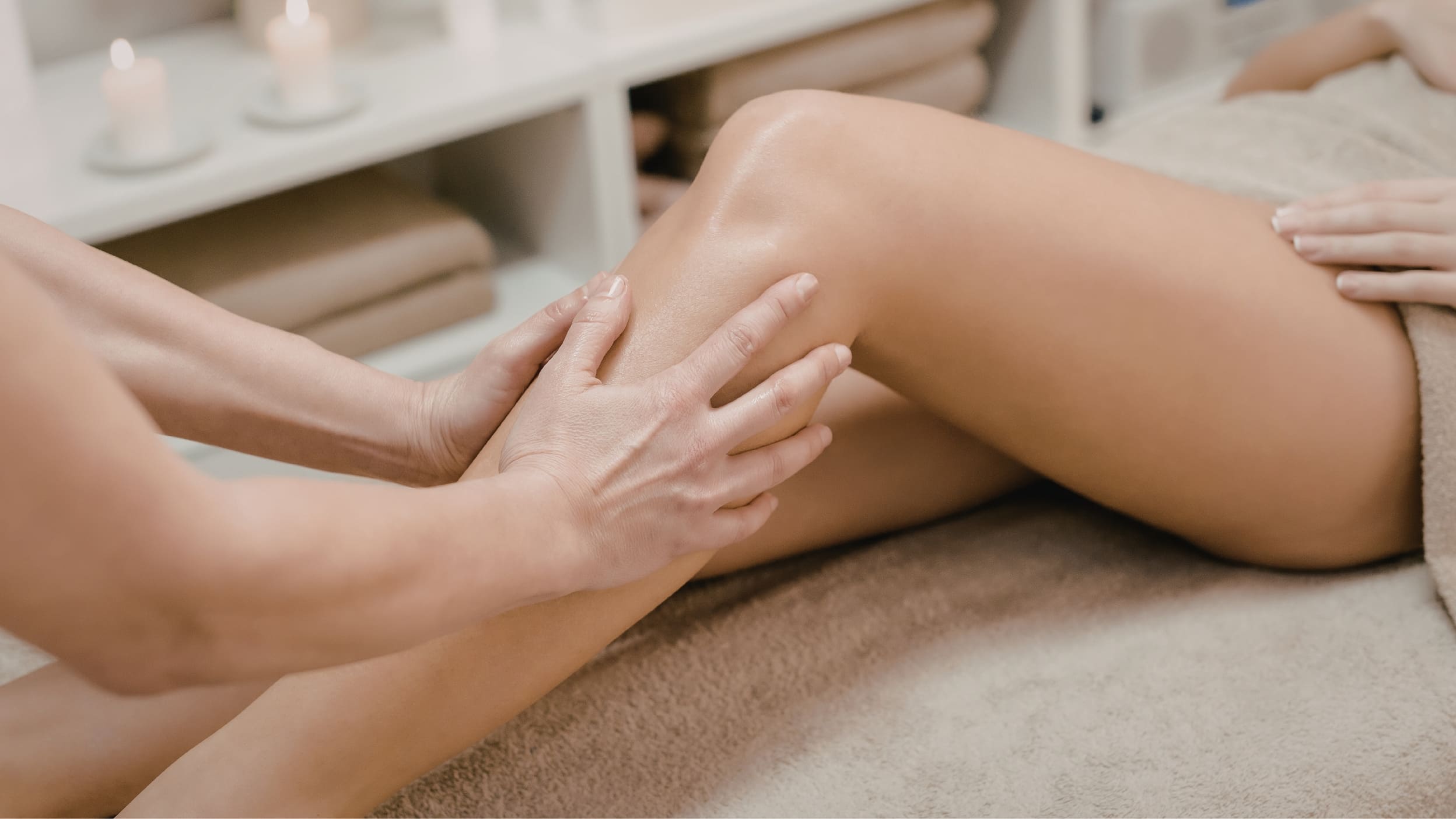
Heat boosts circulation and helps blood move through the veins more efficiently. I wrap a warm towel around my calves or thighs or use a heating pad for 10 minutes. Pairing that with a light massage using magnesium or arnica oil is even better. Always massage toward the heart to support lymphatic flow.
3. Stay Hydrated
It might sound counterintuitive, but drinking more water actually helps flush out excess fluid. When you’re dehydrated, your body holds onto every drop it can. I aim for at least two liters daily and sometimes add electrolytes or a pinch of sea salt to help balance minerals.
4. Move Gently
Even a short walk can get the lymphatic system working again. If you’re sitting at a desk all day, stand up every hour to stretch or flex your ankles. I also like simple yoga poses such as downward dog or gentle leg stretches. The goal is to keep blood flowing without straining.
5. Support With Magnesium
Magnesium is a game changer for PMS symptoms. It helps muscles relax, reduces fluid retention, and supports hormone metabolism. I take magnesium glycinate at night or use a topical magnesium spray before bed.
These small adjustments can make a big difference in how your legs feel within hours.
Natural Remedies That Actually Work
Over the years, I’ve tested countless remedies for PMS discomfort, and a few always stand out. These aren’t quick fixes; they work best when built into your routine.
| Remedy | What It Does | How to Use It |
| Dry Brushing | Stimulates lymph flow and exfoliates skin | Brush upward toward the heart before showering |
| Epsom Salt Baths | Provides magnesium and eases muscle tightness | Soak for 15–20 minutes 2–3 times a week |
| Compression Socks | Improves circulation and prevents fluid buildup | Wear during long flights, standing work, or PMS week |
| Herbal Teas | Dandelion and nettle reduce bloating and water retention | Sip 1–2 cups daily in the luteal phase |
| Anti-inflammatory Foods | Reduce swelling and support circulation | Eat leafy greens, berries, turmeric, and omega-3s |
What I’ve found is that consistency matters more than intensity. If you apply these simple tools regularly, the heaviness becomes far less noticeable.
I also like alternating between warm and cool showers to stimulate circulation. Even just a 30 second blast of cooler water on the legs at the end of a shower can improve vascular tone and reduce that sluggish feeling.
Should You Exercise When Your Legs Feel Heavy
This is one of the most common questions I get from clients. Should I still work out if my legs feel like cement before my period? The answer is yes, but with moderation.
If the heaviness is mild, gentle exercise can actually make it better. Movement increases circulation, which helps flush out retained fluid. Walking, yoga, and swimming are ideal. I often do restorative yoga sessions or take light evening walks during PMS week rather than pushing for high-intensity training.
But if your legs feel sore, achy, or deeply fatigued, rest is the better option. Pushing through can increase inflammation and worsen the sensation. Think of this time as a chance to restore rather than perform.
A simple rule I follow is this: if movement feels energizing, do it. If it feels draining, pause. Your body will thank you later.
When PMS Leg Heaviness Might Signal Something Else
While PMS leg heaviness is usually harmless, there are times when it deserves closer attention. If you notice one leg feels significantly heavier or swollen than the other, or if you experience pain, redness, or warmth, consult a healthcare provider. These symptoms can sometimes indicate circulation issues like varicose veins or, in rare cases, blood clots.
Chronic swelling that lasts beyond your period may also point to conditions such as venous insufficiency, thyroid issues, or lymphatic dysfunction. These are best evaluated by a medical professional.
In my own practice, I’ve seen women mistake hormonal leg heaviness for vascular problems and vice versa. The key difference is timing. If it coincides with your menstrual cycle and resolves once your period begins, it’s likely hormonal. If it persists regardless of your cycle, it’s worth getting checked.
Listening to your body and tracking your symptoms over time gives you clarity and confidence.
What I’ve Learned From Clients and Personal Experience
Every woman’s experience of PMS is unique, but patterns always emerge. The women I’ve worked with who feel empowered through their cycles are the ones who listen to those patterns rather than ignore them.
One client, a nurse who spent long hours on her feet, struggled with intense leg heaviness every month. We adjusted her salt intake, added daily leg elevation before bed, and switched her workouts from running to yoga during her luteal phase. Within six weeks, she reported feeling 70 percent lighter, her exact words.
Another client introduced dry brushing and herbal tea into her evening routine. She said it felt like her legs woke up again before her period.
Personally, I’ve learned to treat PMS as a cue for self care rather than an inconvenience. When my legs start feeling heavy, I use that as my signal to slow down, hydrate more, and practice mindful movement. It’s incredible how much relief comes when you align with your cycle instead of fighting it.
FAQs
1. Why do my legs feel swollen or achy during the luteal phase
Hormonal fluctuations cause water retention and slower circulation, especially in the lower limbs. The result is that heavy, achy feeling many women get before menstruation.
2. How can I relieve heavy legs during PMS quickly
Elevate your legs, drink plenty of water, use a warm compress, and move gently. Magnesium supplements, Epsom salt baths, and herbal teas can provide quick relief.
3. Should I exercise if my legs feel heavy during PMS
Yes, gentle movement such as walking or yoga improves blood flow. If your legs feel very fatigued, rest and focus on hydration and stretching instead.
Final Thoughts
PMS leg heaviness used to frustrate me, but now I see it as one of my body’s quiet signals. It’s not a flaw; it’s feedback. Every time it shows up, it reminds me to slow down, move a little more gently, and care for myself differently during that phase.
What once felt random now feels predictable and manageable. Understanding the hormonal patterns behind these sensations gives you control instead of confusion.
If you’re experiencing PMS leg heaviness, remember that it’s a normal, temporary symptom, one you can manage naturally. Simple changes in hydration, nutrition, and movement can make a world of difference.
Your body is incredibly wise. When you listen, it tells you exactly what it needs. By supporting your cycle rather than fighting it, you’ll find that the heaviness lifts not just from your legs but from your entire experience of PMS.