Table of Contents
Let me guess – you’re scrolling through this article because your partner made a move last night and you felt about as interested as you would in doing your taxes. Or maybe you’re wondering why you went from feeling sexy and confident two weeks ago to now feeling like your libido packed up and moved to another country entirely.
If this sounds familiar, welcome to the club that nobody talks about but pretty much everyone with a menstrual cycle experiences at some point. The truth is, your sex drive doing a vanishing act before your period is completely normal, incredibly common, and has nothing to do with your feelings for your partner or your worth as a sexual being.
The Hormone Rollercoaster Nobody Warned You About
Here’s what’s actually happening in your body during those weeks before your period, and why it feels like someone switched off your sexual interest like a light bulb.
Think of your menstrual cycle as a monthly hormone dance. For the first two weeks after your period, estrogen is steadily climbing, making you feel energetic, confident, and yes – often pretty interested in sex. Around ovulation, you hit peak estrogen plus a surge of testosterone, which is basically nature’s way of saying “Hey, now would be a great time to get pregnant!”
But then comes the plot twist. After ovulation, estrogen takes a nosedive while progesterone rises. And progesterone? It’s basically the hormone equivalent of wanting to wear sweatpants and binge-watch Netflix. It makes you feel sleepy, less social, and often completely uninterested in physical intimacy.
Add to this the fact that your body might be dealing with bloating, breast tenderness, headaches, and general crankiness, and it’s no wonder sex feels about as appealing as a root canal.
It’s Not Just About “Not Being in the Mood”
When people talk about low libido during PMS, they often make it sound like it’s just a matter of not feeling frisky. But for many women, it goes way deeper than that. You might feel:
Completely disconnected from your body. Like you’re living from the neck up and everything below is just this uncomfortable, bloated stranger you’re carrying around.
Physically uncomfortable in your own skin. When your breasts are tender and your stomach feels like a balloon, the idea of someone touching you might feel overwhelming rather than pleasurable.
Emotionally fragile. Sex requires a certain level of vulnerability and openness, and when you’re feeling emotionally raw, that vulnerability can feel too risky.
Like your body belongs to your symptoms, not to you. It’s hard to feel sexual when you’re primarily experiencing your body as a source of discomfort rather than pleasure.
This isn’t laziness or prudishness – it’s your body and brain responding normally to significant hormonal shifts.
The Things We Don’t Say Out Loud
Let’s talk about some of the stuff that happens during PMS that makes sex feel complicated, but that nobody really discusses openly.
You might feel gross. Between bloating, potential digestive issues, and just feeling “off,” you might not feel like the sexy, confident person you usually are. And when you don’t feel attractive, it’s really hard to get in the mood.
Everything might feel too intense. Your skin might be more sensitive (and not in a good way), your emotions might feel too close to the surface, and the idea of the physical and emotional intensity of sex might feel like too much.
You might feel guilty about not wanting it. Especially if your partner has a consistent sex drive, you might start feeling bad about being the “difficult” one or worry that you’re being unfair to them.
Your body might not respond the way it usually does. Even if you try to push through and have sex anyway, you might find that arousal doesn’t come as easily, or that things that normally feel good just feel… meh.
What About When You DO Want Sex During PMS?
Here’s something interesting – not everyone loses their sex drive before their period. Some women actually get more interested in sex during PMS, either because physical touch helps with cramping and tension, or because they crave the emotional connection and stress relief that good sex can provide.
If that’s you, there’s nothing wrong with that either. You might find that you want different kinds of touch or intimacy during this time – maybe slower, gentler, more emotionally focused rather than purely physical.
The key is paying attention to what your body actually wants rather than what you think it should want.
Period Sex: The Elephant in the Room
And then there’s the question of what happens once your period actually starts. Some women find that they get their sex drive back during menstruation, while others remain uninterested until it’s over.
If you’re curious about period sex but worried about the mess, here’s the reality: it’s not as dramatic as you might think. A towel under you, a shower afterward, and you’re good to go. Some women find that orgasms actually help with cramps, and the increased blood flow can make things feel more sensitive in a good way.
But if period sex isn’t for you, that’s completely valid too. There’s no right or wrong way to feel about your body during menstruation.
How to Talk to Your Partner About This
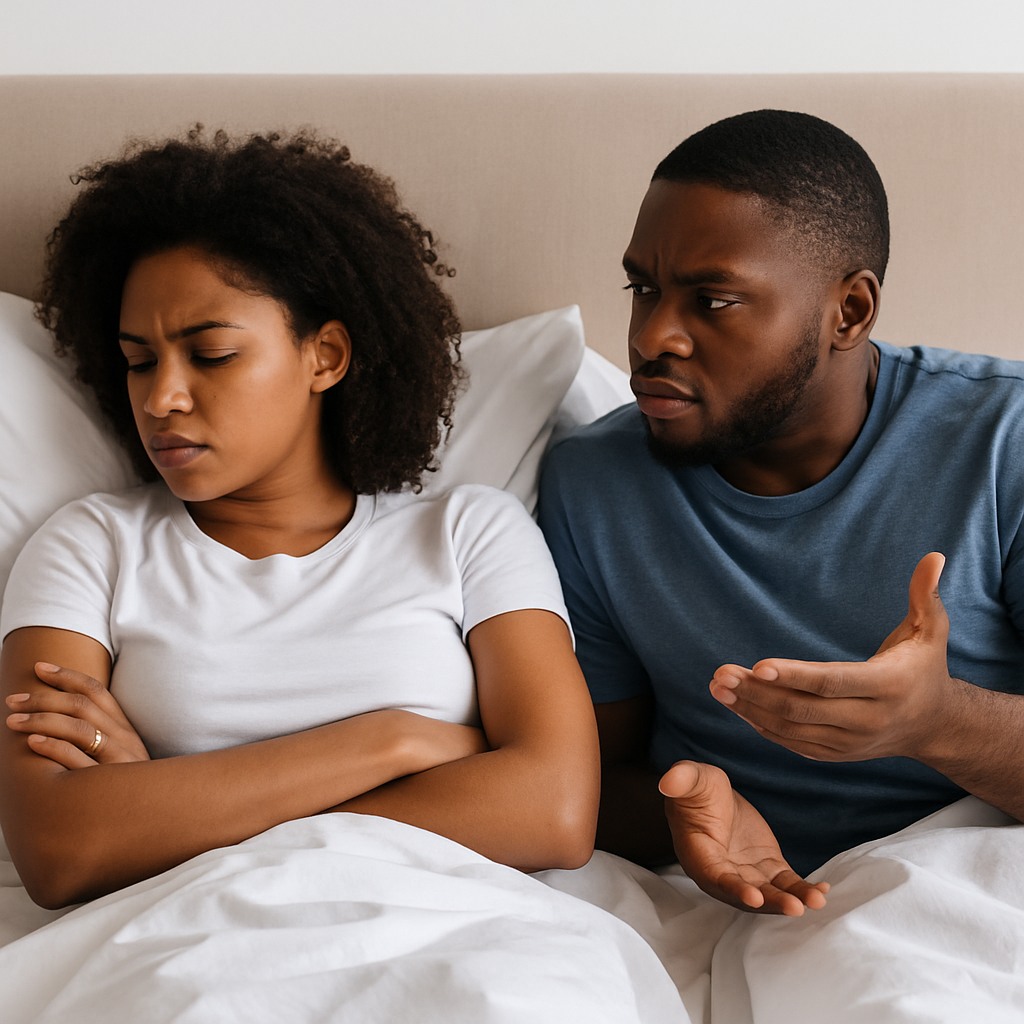
This is probably the part you’ve been dreading, right? How do you explain to your partner that you went from being interested in sex to feeling like a completely different person without making them feel rejected or confused?
Here’s what I’ve learned from talking to couples who navigate this successfully: honesty really is the best policy, but timing and framing matter.
Try something like: “I want you to know that I’m still attracted to you and I still love being close to you, but my body goes through some pretty intense changes before my period that affect how I feel about sex. It’s not about you, and it’s not permanent – it’s just how my hormones work.”
Most partners, once they understand what’s happening, are actually pretty relieved to know it’s not about them or your relationship. They might ask what they can do to help, which brings us to…
What Actually Helps (And What Doesn’t)
What doesn’t help: Trying to power through and have sex anyway when you really don’t want to. This can create negative associations with sex and make the problem worse over time.
What does help: Communicating about other ways to maintain intimacy. Maybe it’s cuddling while watching a movie, giving each other massages, or just spending quality time together without any sexual pressure.
What doesn’t help: Your partner taking your low libido personally or trying to convince you that you’ll feel better if you just try.
What does help: Your partner understanding that this is temporary and biological, and being patient while still expressing their needs honestly.
What doesn’t help: Feeling guilty about your body’s natural responses or trying to fake enthusiasm you don’t feel.
What does help: Accepting that your sexuality is cyclical and that’s completely normal. Some weeks you might feel like a sex goddess, and other weeks you might feel more like a cozy nun. Both are valid.
When Low Libido Becomes a Bigger Problem
While cyclical changes in sex drive are normal, there are some signs that might indicate you need additional support:
If your low libido is lasting longer than your PMS window and extending throughout your cycle, that might be worth exploring with a healthcare provider. Same if you’re never interested in sex anymore, even during the times when you used to feel more desire.
Sometimes birth control, medications, stress, relationship issues, or underlying health conditions can affect libido in ways that go beyond normal hormonal fluctuations.
Also, if the disconnect between you and your partner around sex is causing serious relationship problems, couples therapy can be incredibly helpful. A good therapist can help you both understand what’s happening and develop strategies for maintaining intimacy in ways that work for both of you.
Practical Strategies for the Low-Libido Days
Focus on other forms of intimacy. Physical closeness doesn’t have to mean sex. Sometimes a long hug, holding hands while watching TV, or giving each other back rubs can maintain that connection without pressure.
Take care of your physical comfort. If bloating or breast tenderness is making you feel unsexy, invest in comfortable, supportive underwear and clothes that make you feel good in your body.
Practice self-compassion. Your worth as a partner isn’t determined by how often you want sex. You’re dealing with real biological changes that affect how you feel, and that’s not something you need to apologize for.
Consider what might help you feel more connected to your body. Maybe it’s gentle exercise, a warm bath, or spending time doing something that makes you feel capable and strong.
Keep the door open for intimacy without pressure. Sometimes libido can surprise you and show up when you least expect it. But that’s more likely to happen when you’re not feeling pressured or guilty.
The Bigger Picture
Here’s what I really want you to understand: having a cyclical sex drive doesn’t make you broken, difficult, or a bad partner. It makes you human with a menstrual cycle.
We live in a culture that often treats male sexuality as the default – steady, consistent, always ready to go. But female sexuality is often more complex, more connected to hormonal fluctuations, emotional states, and relationship dynamics. Neither is better or worse – they’re just different.
Learning to work with your body’s natural rhythms rather than against them can actually lead to a more satisfying sex life overall. When you stop feeling guilty about the low-libido times, you can more fully enjoy the high-libido times.
Moving Forward
If you’re dealing with PMS-related changes in libido, start by tracking your patterns for a few months. Notice when you feel more or less interested in sex, and see if you can identify the connection to your cycle.
Then, have an honest conversation with your partner about what you’ve noticed. Most people are more understanding than you might expect, especially when they realize it’s not about them.
Finally, be patient with yourself. Your sexuality is allowed to ebb and flow. You don’t owe anyone constant sexual availability, even in a committed relationship. What you do owe your partner is honest communication about what’s happening and a willingness to find other ways to maintain intimacy and connection.
Remember, this is temporary. Your libido will come back. And when it does, you might find that all this honest communication and patience has actually made your sexual relationship stronger and more understanding overall.
You’re not broken. You’re not difficult. You’re just a person with a menstrual cycle, and that comes with natural fluctuations that are completely, totally normal.